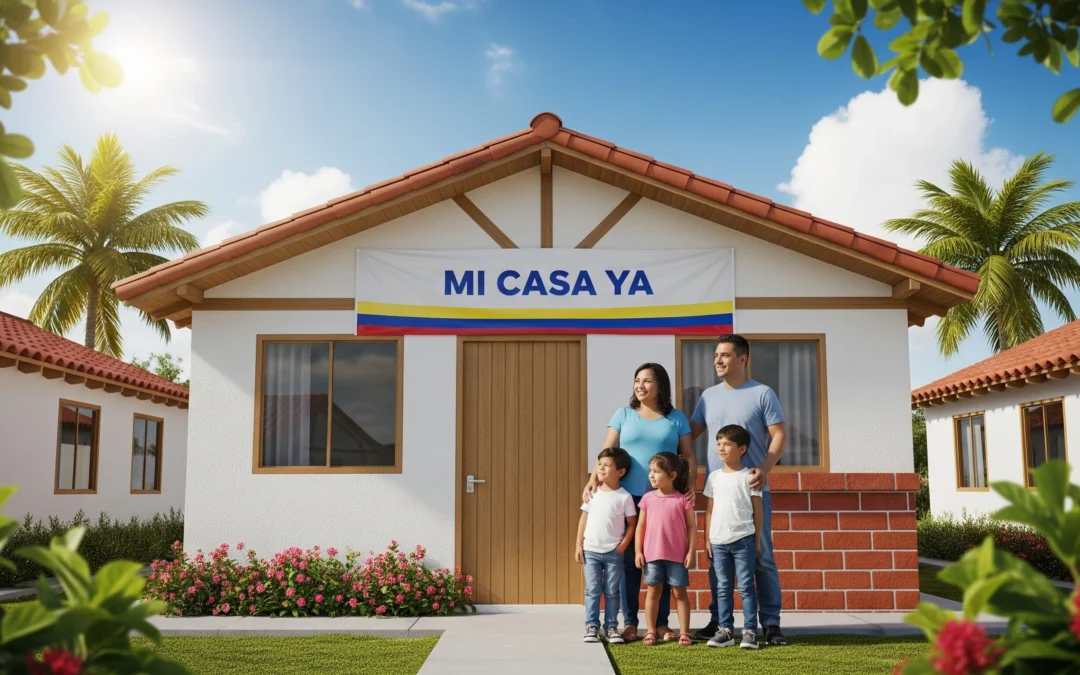
In a country where finding an affordable home feels like chasing a unicorn, Colombia’s “Mi Casa Ya” (My House Now) program is like a golden ticket for families dreaming of owning their own place. Imagine going from paying rent every month to having a home that’s truly yours—this program makes that dream real for low and middle-income families, helping them start building wealth that can last generations.
Understanding Mi Casa Ya: Program Overview and Objectives
Think of Mi Casa Ya like a superhero for families dreaming of their first home. The government basically says, “Hey, if your family earns up to 4 minimum wages, we’ve got your back to get you into a brand-new urban house.” It’s all about making sure hardworking families don’t have to keep renting forever.
Here’s the genius part: the program tackles the biggest obstacle to buying a home—the scary down payment. Imagine wanting the latest game console but having to save for years just to get it. Mi Casa Ya swoops in with financial help that makes that impossible first step doable. Thousands of families every year get that boost, turning “someday I’ll own a home” into “I’m moving in next week!”
Key Program Features
Tiered Subsidy Structure:
The program knows not every family needs the same boost. Families in Sisbén groups A1 to C8 get a whopping 30 minimum wages for their down payment, while those in C9 to D20 get 20 minimum wages. It’s like giving the right-sized superhero cape to each family so they can soar.
Focus on New Construction:
This isn’t about fixing up old houses. Mi Casa Ya is all about brand-new urban homes—modern, safe, and ready for life. Plus, it keeps the construction industry buzzing.
Integration with Financial System:
Families still need to get their mortgage approved, so it’s not magic money—it’s smart, sustainable support. Think of it like having a coach helping you train before a big championship—you’re prepared and ready to win.
Eligibility Requirements: Who Can Benefit?
If you’re dreaming about your family finally owning a home, knowing who can actually get help from Mi Casa Ya is super important. The program isn’t for everyone—it’s laser-focused on helping the families who need it the most. Think of it like a VIP pass, but for buying your first house.
Primary Eligibility Criteria
- Income Limitations: To get in, families need to earn up to 4 minimum wages. Basically, it’s designed for hardworking families who aren’t rolling in moneyt
- First-Time Homebuyer Status: You can’t already own a house. Mi Casa Ya is for new homeowners, not for people trying to stack properties like Pokémon cards.
- No Previous Housing Assistance: If you’ve ever gotten help from the government to buy a home before, this one’s off-limits.
- Sisbén Classification: Families need to be in Sisbén IV, groups A1 to D20, which basically measures how much help a family might need.
- Mortgage Pre-Approval: You also need an approved mortgage. You still need to show you can handle the responsibilities of owning a home.
Additional Considerations
Applicants also need to pick a house that fits the program rules, specifically in VIP or VIS housing categories—these are homes that are affordable and meet quality standards. It’s like choosing a game that’s compatible with your console; the fit has to be just right.
Financial Benefits and Subsidy Structure
Mi Casa Ya isn’t just handing out money—it’s like a carefully designed cheat code for families trying to buy their first home. The program balances giving real support with making sure the system stays strong and fair for everyone.
Subsidy Amounts and Distribution
For 2024 and 2025, the help is organized into clear tiers based on Sisbén classifications:
- Higher Support Tier: Families in A1 to C8 get a down payment boost worth 30 minimum wages, which in 2024 equals around $39 million pesos.
- Lower Support Tier: Families in C9 to D20 still get serious help, with subsidies worth 20 minimum wages. It’s a bit less, but still a big push toward owning a home.
Program Scale and Investment
The Colombian government is putting real muscle behind this. In 2024 alone, the goal is 50,000 subsidies, all with guaranteed interest rate coverage. Over this government’s term, that adds up to 200,000 families getting help. Each subsidy is worth millions of pesos, which shows how serious the country is about making housing accessible. Think of it like a long-term game plan: not just a one-time gift, but a sustained effort to help thousands of families finally have a place to call their own.
Application Process and Timeline
Applying to Mi Casa Ya is like prepping for a big adventure: get your stuff ready, follow the steps, and you’ll reach your goal. It’s fair, keeps cheaters out, and is doable if you plan smart.
Step-by-Step Application Guide
- Pre-Application Preparation: Check your “backpack” first—update your Sisbén, gather income docs, explore VIP or VIS housing, and start talking to approved lenders.
- Mortgage Pre-Approval: You need a mortgage OK first. Think of it like scoring a concert ticket before booking travel—it proves you can actually buy the house.
- Formal Application Submission: Submit all documents through banks or the Ministry’s online platform. Make copies, keep receipts, and stay organized!
- Housing Selection: Pick a house that fits price and construction rules. Like choosing a phone that works with your carrier, it has to match the program’s specs.
Timeline Considerations
Now, families can pre-assign subsidies for up to 24 months. That’s like holding a spot in line while saving up or waiting for the perfect apartment. It gives breathing room, so you can make smart choices instead of rushing.
Impact on Colombian Housing Market
Mi Casa Ya isn’t just giving families homes—it’s flipping the whole housing scene in Colombia.
Market Stimulation Effects
By pushing new construction, the program guarantees demand, so developers pump out more affordable homes. And it’s paying off: in 2024, new home sales shot up 31.5%, with VIS housing leading the charge. Families are buying, builders are hustling—it’s a win-win loop.
Geographic Distribution and Urban Development
Instead of families building random shacks in unplanned areas, Mi Casa Ya steers growth into organized urban projects. Think SimCity done right—roads, water, power—all built into the plan, not just patched together.
Financial Inclusion Benefits
Since you need a mortgage pre-approval, families who never dealt with banks are now building credit. My neighbor joked Mi Casa Ya “forced him to befriend a bank”—but now he’s got both a house and a credit history. That’s not just a roof over your head, it’s a launchpad for a stronger future.
Challenges and Recent Developments
Mi Casa Ya hasn’t been a smooth ride—it’s had pauses, bumps, and updates, kind of like a video game that keeps getting patched.
Program Suspension and Reactivation
In December 2024, the program hit “pause” due to budget and admin issues, leaving thousands wondering, “Now what?” But in 2025, it was back, part of a bigger push to help more families—like a canceled show getting a surprise new season.
Allocation Challenges
Money is tricky. Around $29 billion pesos has been set aside for subsidies, but distributing it fairly isn’t easy. Some families still face delays, kind of like missing out on concert tickets even though you queued up.
Administrative Improvements
The good news? The program is learning. Digital platforms are smoother, banks are coordinating better, and paperwork is simpler. One friend said applying now feels more like shopping online than running in circles at government offices—a real win for families.
Looking Forward: Future of Mi Casa Ya
Mi Casa Ya is shaping up to be more than a short program — it’s becoming a toolbox for how Colombia will tackle housing for years. Think of it like a phone that keeps getting smarter with each update: the lessons learned now will make future versions much better for families.
Program Evolution and Adaptation
The program has shown it can pause, reboot, and change rules when needed. That flexibility matters — it’s like reworking a group project after a bad first draft so the final result actually helps people. Future versions will likely speed up digital processing, tie housing plans into city design, and target help smarter so the families who need it most get it.
Integration with Broader Housing Policy
Mi Casa Ya won’t work alone. Its success depends on teaming up with rental support, renovation grants, and city planning—kind of like how different players on a soccer team coordinate to win. When it meshes with other policies, you get a full strategy that covers buying, fixing, and upgrading homes.
Sustainability Considerations
Long-term success means balancing big goals with the money to pay for them. Future moves will likely protect the program’s budget, keep subsidies meaningful, and add green building rules so houses cost less to run. That way, families win now and the planet isn’t paying the bill later.
- Read Also: Chile: Navigating the Housing Subsidy (‘Subsidio Habitacional’)
- Read Also: Argentina: Rent vs Buy Amid Inflation – Navigating Housing Decisions
Conclusion: Building Colombia’s Future Through Homeownership
Mi Casa Ya is way more than just a housing program—it’s Colombia saying, “We believe owning a home can change lives.” By giving families big subsidies, smoother processes, and connecting them with banks, the program has already helped thousands trade rent receipts for house keys.
But the magic goes beyond individual families. Mi Casa Ya boosts the housing market, powers construction jobs, and pushes the whole economy forward. Sure, there are still headaches like budget issues and paperwork glitches, but the fact that the program keeps adapting shows real resilience.