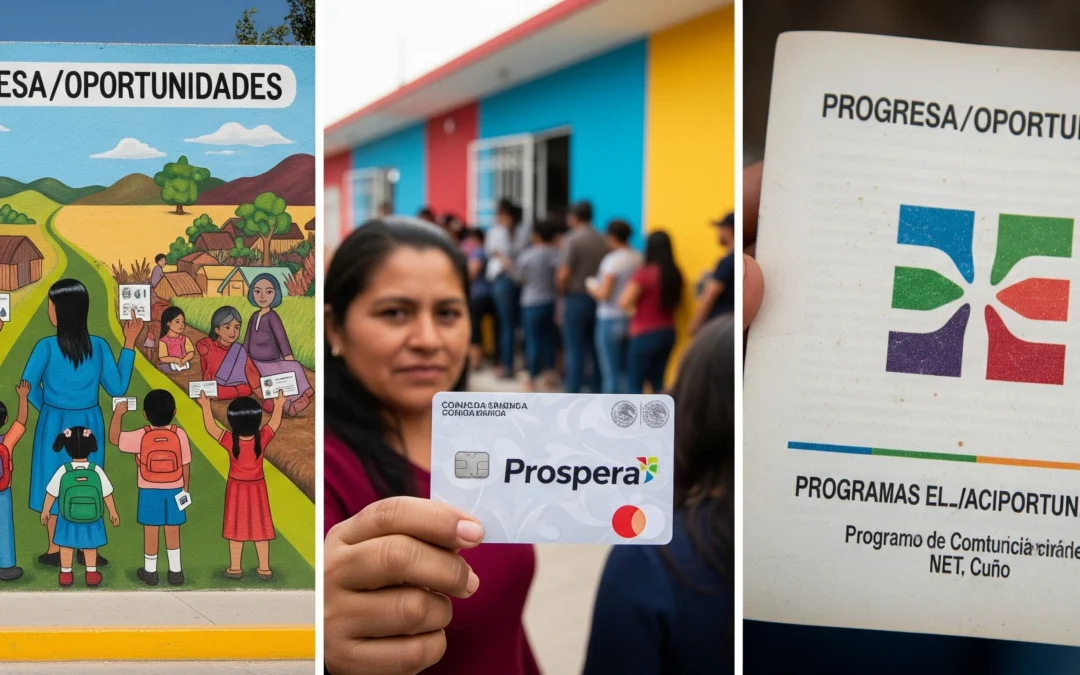
Mexico’s conditional cash transfer program—first called Progresa, then Oportunidades, now Prospera—is basically a superstar in the world of social programs. For over 20 years, it’s helped millions of families level up their lives, giving kids a better shot at school and families a hand to get ahead. Imagine a program so powerful that other countries copy it—yeah, that’s how big it is. If you want to understand how smart poverty-busting works, this program is like the ultimate case study.
The Genesis of a Revolutionary Approach
Think of PROGRESA (later Oportunidades, now Prospera) as Mexico’s bold answer to the 1994 crisis — but smarter than just handing out money. Launched in 1997, it treated poverty like a puzzle with many pieces: income, school, health, and nutrition. Instead of cash alone, families got money tied to kids staying in school and getting medical checkups — a bit like paying rent AND investing in the family’s future. Starting small, it ballooned into a nationwide program reaching millions (about 5.8 million families) and became a model for how to break the cycle of poverty by investing in people, not just wallets.
Program Evolution: From Progresa to Prospera
The program changed names and shapes over time — Solidaridad in 1988, Progresa in 1997, Oportunidades in 2002, and later Prospera — each rename reflecting new political vibes and smarter ideas about fighting poverty.
Progresa Era (1997–2002)
Progresa started in the countryside and nailed down the big idea: don’t just give money — link it to things that build people’s futures. Families got cash only if kids went to school, showed up for health check-ups, and learned about good nutrition. Picture a town where parents finally could afford school supplies because the program paid a bit extra when kids stayed in class — that simple rule changed countless mornings.
Oportunidades Expansion (2002–2014)
When it became Oportunidades, the program leveled up and moved into cities. It kept the “cash-for-school-and-health” heart but added extras: vocational scholarships, help for elders, stuff for different kinds of families. Imagine the program as a toolkit that grew — it could now help a teenager learn a trade in the city or support a grandma who needed a steady safety net.
Prospera Integration (2014–2019)
Prospera was the biggest remix: it didn’t just hand out conditional cash, it started folding in other social programs and even basic financial services — small savings accounts, credit access — so families could plan ahead. Instead of one-off help, it tried to be a ladder out of poverty: cash today, skills and financial tools for tomorrow. It turned welfare into a longer-term strategy, not just a temporary fix.
Core Program Components and Mechanisms
The magic of this program comes from how smartly it’s built — it doesn’t just hand out cash, it tackles poverty from multiple angles at once. Education, health, and nutrition aren’t just separate pieces; they work together like a dream team to change families’ lives for the long haul.
Educational Support
Families get money for every kid who goes to school, and the amount goes up for older kids because high school can be expensive in time and effort. The program really zooms in on the tricky switch from primary to secondary school — that’s when kids are most likely to drop out. Imagine a kid who almost quit middle school but sticks it out because the family can afford supplies and transport — that little push can change the whole trajectory of their life.
Health and Nutrition Interventions
The health side is just as smart. Families have to go for regular check-ups, kids get preventive care, and everyone joins health education sessions. Pregnant moms and babies get extra care and supplements to fight malnutrition. Picture a tiny village where kids who would’ve been undernourished suddenly grow stronger and healthier because the program makes sure they eat well and see doctors regularly.
Conditional Structure
What makes this program really different from traditional welfare is the “conditional” part. You don’t just get money for free; you have to invest in yourself and your family — school, health, nutrition. It’s like getting a reward for leveling up your life. These conditions make sure the help actually builds a better future, not just a quick fix for today.
Measurable Impact and Outcomes
Mexico’s cash-for-school-and-health program isn’t just theory — it’s been rigorously studied, and the results are impressive across education, health, nutrition, and even long-term income.
Educational Achievements
Kids in the program, especially boys, get almost an extra year of schooling compared to kids not in it. Girls and kids in rural areas see the biggest boosts. It’s not just about showing up — kids progress through grades more smoothly, repeat less, and get a better learning experience. Picture a teen in a small village who might’ve dropped out in middle school but stays in class because the family can afford it — that small nudge ripples through their whole future.
Health and Nutrition Improvements
Families go for more regular check-ups, kids get sick less, and overall health improves. Malnutrition drops, diets get better, and parents learn how to feed their kids smarter. Think of a baby who might have been underweight suddenly thriving because mom got support and advice — that’s the real-life impact.
Long-term Economic Benefits
The program doesn’t just help today — it changes tomorrow. Kids who benefited grow up earning more, staying in school longer, moving around more confidently, and even waiting longer to start families. It’s like investing in a supercharged future, not just handing out cash.
Poverty Reduction
On a big-picture level, the program has cut national poverty rates by nearly 2%, showing that smart, targeted support can really move the needle for a whole country.
Global Influence and Replication
Mexico’s cash-for-school-and-health program isn’t just a local hero — it’s a global superstar. Its smart design and proven results have inspired other countries to copy the model. Think of it like a hit app: Brazil, Colombia, Peru, and others made their own versions, tweaking it to fit their people and cultures.
Even big organizations like the World Bank have waved the Mexican program around as the gold standard for fighting poverty. Because it’s based on solid evidence and careful evaluation, it set a new bar for how social programs should be designed and measured. Imagine a small town idea spreading worldwide because it actually works — that’s exactly what happened here.
Financial Inclusion and Economic Integration
One of the coolest upgrades to the program was teaching families how to use banks and manage money — not just handing out cash. After joining, many families started using real bank accounts instead of hiding money at home. Imagine a family who used to stash coins under the mattress now learning to save safely and even getting money from relatives abroad more easily — that’s a game-changer.
This part of the program shows that fighting poverty isn’t just about giving money today; it’s about opening doors to the financial world, helping families plan, save, and build a stronger, more stable future.
Challenges and Limitations
Even a superstar program like this isn’t perfect. Some studies show it hasn’t completely ended the cycle of poverty from one generation to the next. Its impact isn’t the same everywhere — some towns, regions, or groups of people respond better than others.
Running the program is also tricky. Keeping track of who qualifies, making sure families meet the conditions, and handling all the paperwork takes serious brainpower and resources. Imagine trying to manage a giant school where every student has a different schedule, health check-up, and savings account — it’s complicated!
Politics can shake things up too. New governments sometimes tweak or even threaten the program, which shows it’s both strong and a bit fragile. Despite these bumps, it has survived and adapted over decades, proving its real value.
- Read also: Argentina: ‘Asignación Universal por Hijo’ (AUH)
- Read also: Colombia: ‘Familias en Acción’ and its Impact on Poverty
Conclusion: A Legacy of Innovation and Impact
years, it’s shown that giving families cash tied to school, health, and nutrition can actually work — kids stay in school, eat better, and families build a brighter future.
Its journey from Progresa to Prospera shows how programs can adapt while keeping their core mission alive. Even beyond Mexico, other countries have looked at this model and thought, “Hey, we can do this too!”
The real magic? It doesn’t just help today — it invests in people, breaking cycles of poverty for the next generation. Millions of families have benefited, and the world has learned how smart, well-designed social programs can truly transform lives.